Any style · sound, set, lighting, costume
Production roles
Each ensemble member is responsible for performance choices and production roles. The frameworks on this page apply to any unit and any style. The style specific notes show how the priorities shift depending on what your unit asks of you.
What artistic intention does this choice serve and what would the alternative have done differently? Top band justification names the choice and what was rejected. “We used a single profile spot rather than a general wash because we wanted X” is band 7 writing. “We used lighting” is band 2 writing.
Sound
Sound shapes how the audience receives every other choice on stage. Ask what each sound is doing for the scene: creating atmosphere, telling the audience what to notice, or setting the world of the piece. Different styles answer that differently.
Principles
- Decide whether each cue is diegetic (in the world of the scene) or non diegetic (heard only by the audience). Naming this in your write up is itself analytical work.
- Underscoring creates atmosphere. If you want to create a sense of atmospheric emotion, it is absolutely fine to use. Keep it deliberate and motivated.
- Silence is a sound choice. Held silence is one of the most powerful moments a piece can make. Use it.
- A soundscape is a good way to use overlapping sounds. A sound motif, a repeated sound, can be developed across the piece.
How priorities shift by style
Naturalism
Sound is diegetic by default: the radio in the room, the kettle, the traffic outside. Underscoring can create atmosphere where a moment calls for it.
Epic Theatre / Brecht
Sound interrupts and argues. Spass songs make the audience think, with variation in tone and intonation. Sparse and deliberate. Music must not absorb the audience.
Expressionism
Sound externalises inner states. Overlapping, distorted, jarring. Can be hyper real, a heartbeat amplified, or symbolic, a single sustained tone.
Physical theatre
Often score led. Music drives rhythm, transitions and ensemble breath. Sound and body are inseparable.
A strong sound justification names the artistic intention, the specific cue with timing and the link to the SOI. Say what atmosphere the sound created and the impact it had on the audience.
Set
Your set tells the audience what kind of theatre they are about to watch. Set can give an indication of location, it can be symbolic and it can set the period, the genre or the style.
Principles
- Every piece of set on stage must earn its place. Really analyse: why is it there, what is its purpose and what does it help justify?
- Professional productions have more options. For your practical performance you have to work with the room, the black box. Keep it simple.
- It is better to keep the set simple than to need lots of blackouts to change it. A simpler set aids transitions and overcrowding the space is rarely the best option.
- Set changes can be hidden or visible. Visible set changes, pieces moved on stage in view of the audience, are themselves part of the staging.
- Sightlines. Every audience member needs to see the moment that matters. Block to the room you are in, not the room you imagine.
How priorities shift by style
Naturalism
Detailed, illusionistic set. A kitchen with real props, a living room the audience can lose themselves in. Furniture is functional and motivated.
Epic Theatre / Brecht
Minimal and visible. A stool, a rope, a placard, a puppet, each chosen as a sign. The stage announces itself as a stage.
Expressionism
Distorted, fragmented set. Angles, broken structures, asymmetry. The space externalises the protagonist's inner state.
Physical theatre
Often empty or near empty. The bodies become the set. Frames and simple pieces are reconfigured live as part of the choreography.
Two different jobs, so be clear which one you are doing. When you justify your own set, for Criterion B and D: say why each piece is there, what purpose it serves and what it helps justify and link the design to the SOI. When you evaluate the use of set in a production you watched, for Criterion A·ii: say what the set indicates, location, period, genre or style, or what it stands for symbolically and the impact it has on the audience. Avoid “we wanted it to look interesting”.
Lighting
Lighting is the design element students most often under use. Every scene has a state. State changes are choices. Lighting reveals composition. Lighting reads as time, mood, focus and exposure.
Principles
- Every scene needs a named state, a unified picture made of intensity, colour, angle and area. “General wash” is not a state.
- State changes, cross fades, snaps and blackouts are punctuation. Each one must have a reason.
- Direction matters. Front light flattens, side light sculpts, back light silhouettes, top light isolates. Choose deliberately.
- Coloured light tells the audience how to feel before any performer speaks. Use sparingly and with reason. Saturated colour reads as mood. Pale tints read as time.
Know your lanterns
Floodlight

Designed to cover a large area at a relatively short throw distance. The choice for lighting scenic cloths and cycloramas.
PAR

Traditionally called PARcans. Very bright, intense beams used for washes of colour and striking beam effects. The beam is slightly oval and the orientation of the oval can be adjusted.
Fresnel
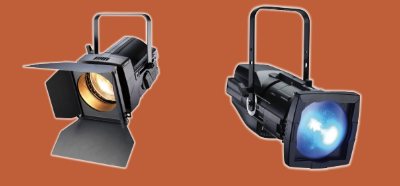
Pronounced fre-NEL. A soft edged beam that creates even washes, with a beam angle adjustable from narrow spot to wide flood. Barndoors let you roughly shape and contain the light.
Profile
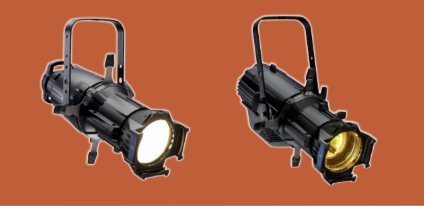
Also called ellipsoidals, the most versatile of all stage lights. Hard or soft edged beams, internal shutters that let you shape the beam precisely and gobos for window projections and other textured effects. Followspots are profiles.
Moving lights

Automated versions of the types above. Washlights automate the PAR or fresnel. Spots automate profiles.
Intensity and colour
Intensity helps with visibility, but it also creates mood. Colour creates mood, conveys information and helps to make sets, costumes and actors look even better.
When creating your cues, try starting with the intensity at 50%. That way you have a good reference point and can make it brighter or dimmer as you need.
How priorities shift by style
Naturalism
Motivated lighting: sunlight through a window, a lamp on the table, candle light. Sources should feel real. Mood comes from time of day, not theatre tricks.
Epic Theatre / Brecht
Bright, even, exposing. Coloured washes are anti Brechtian. The audience sees themselves and the actors clearly. Light reveals, it does not create mood.
Expressionism
Sharp angles, contrast, shadow. Side and back light dominant. Colour used symbolically: red for danger, white for hospital glare.
Physical theatre
Often heavy use of side light to sculpt the body. State changes choreographed in sync with movement.
A strong lighting justification names the state, its intensity, colour and angle, explains what the change exposes or hides and links to what the audience is forced to see in that moment as it serves the SOI.
Costume
Costume is the first thing the audience reads about a character, before any line. Costume is symbolism and what it stands for depends on your style: colour and change tell the audience who someone is and what is happening to them.
Principles
- For your own piece, keep it simple but representational. You will not be marked down for not having lots of costume.
- Colour does the work. If the whole ensemble dresses the same, the audience reads them as one group. One different colour singles a character out.
- A costume change as the piece goes on needs a reason behind it. If you start fully dressed in a suit and end in a ripped T shirt, the audience will look for why.
- Multi rolling costumes need a clear switch, a hat, a coat, a sash, readable by the audience in seconds. Decide whether the switch is visible or hidden.
How priorities shift by style
Naturalism
Realistic, period accurate dress. Character backstory readable in fabric, wear and fit. The audience reads costume without noticing it.
Epic Theatre / Brecht
Costume reads as social attitude: a class, a role, a job, not a personality. Multi role switches happen in view of the audience.
Expressionism
Stylised, exaggerated, sometimes uniform like. Bodies de individualised into types. Colour symbolic rather than realistic.
Physical theatre
Often unified. Same trousers, same shirts, same shoes, so bodies and movement read clearly. Costume is a starting position to disrupt.
A strong costume justification talks about colour and the reason behind the choice. If your ensemble all dress the same, or a costume changes as the piece goes on, say why: what the audience reads from it and how it links to the SOI.
Production choice at three levels
The same lighting decision, written at three bands. The technical choice does not change. What changes is whether the writing names the alternative, the audience effect and the SOI link.
Band 1 to 2States
“We used a bright light during the song.”
No reasoning. No SOI. Could be any production.
Band 5 to 6Explains
“During the song we used a bright, even wash so the audience could see the performers clearly. This was a deliberate choice to support the artistic intention.”
Technique named, reasoning sketched. But the SOI is missing and the choice is not contrasted with what was rejected.
Band 7 to 8Justifies
“During the song we held a bright, even wash on the ensemble, rejecting an isolating spotlight, which would have made the moment feel like a confession the audience could absorb emotionally. The flat wash exposed the singer as one body among many delivering an argument. The SOI lived in the lighting decision precisely because difference was held in the open, not isolated as something special or pitiable.”
Names what was rejected as well as what was chosen. Argues the SOI through the lighting decision. This is the justifies move at full power.